


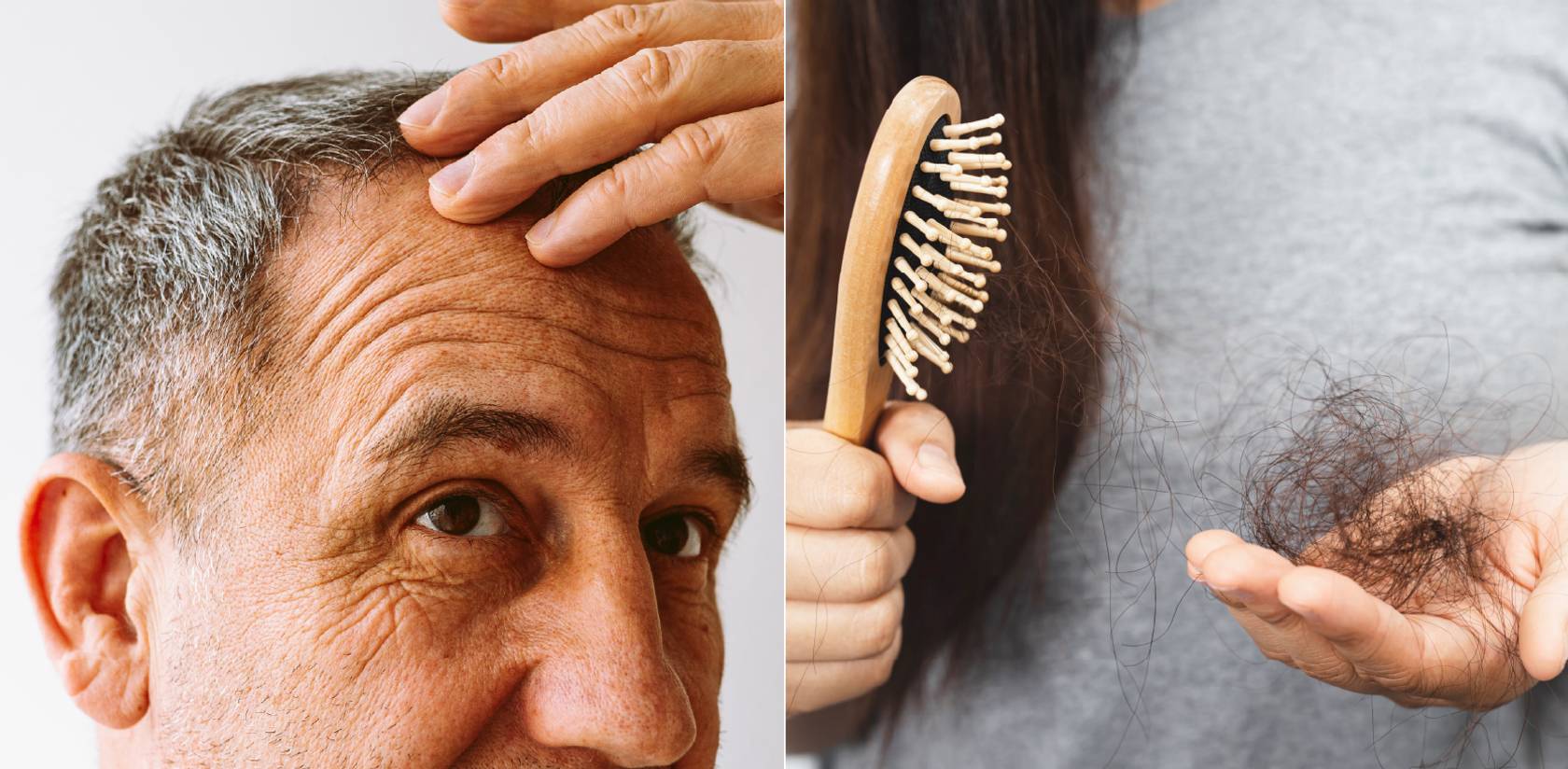
Stress is more than a mental or emotional experience. It creates measurable physiological changes in the body, including shifts in hormone levels, inflammatory signaling, and cellular energy production. One of the most visible places this disruption can appear is in the hair growth cycle.
Periods of high stress are frequently associated with increased hair shedding and thinning. Understanding why this happens — and how cellular energy plays a role — is key to supporting healthier hair growth.
Does Stress Really Cause Hair Loss?
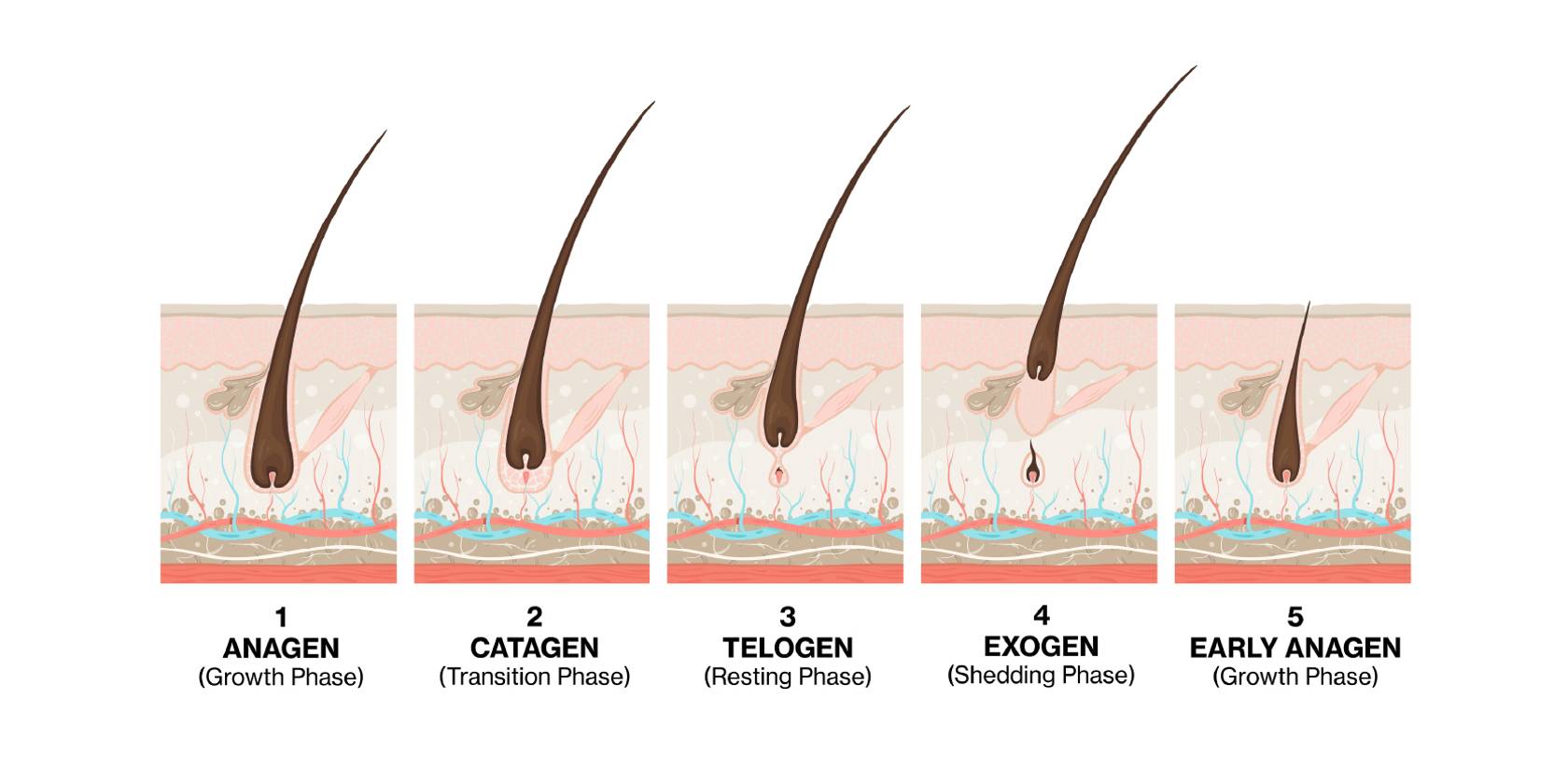
Chronic stress has been shown to disrupt the normal hair growth cycle. Elevated cortisol levels and stress mediators can push hair follicles prematurely from the growth phase (anagen) into the shedding phase (telogen).
Research demonstrates that stress signaling molecules such as corticotropin-releasing hormone (CRH) and Substance P (a neuropeptide also known as SP) can directly influence follicular cycling and inflammatory pathways.
The Hair Growth Cycle: Why Energy Matters
Each follicle cycles through three primary phases: anagen (growth), catagen (transition), and telogen (resting/shedding). Hair growth is metabolically demanding and requires significant ATP production within the follicle’s mitochondria.
When mitochondrial energy production declines — whether from inflammation, stress, or reduced circulation — follicles may produce thinner hair shafts, shorten the anagen phase, or shed prematurely.
What Is Photobiomodulation?
Photobiomodulation (PBM) is the scientific term for therapeutic red and near-infrared light therapy. Research has shown that specific wavelengths of red light are absorbed by cytochrome c oxidase within the mitochondria, increasing ATP production.
Increased ATP supports cellular repair, protein synthesis, and improved microcirculation — all of which are critical for healthy follicular function.
Red Light Therapy for Hair Growth: Clinical Evidence
Randomized controlled trials have demonstrated that low-level light therapy (LLLT) in the 630–660nm range can increase hair density and hair count in individuals with androgenetic alopecia.
These studies suggest that red light therapy supports follicles by increasing cellular energy availability, enhancing circulation, and modulating inflammatory processes.
Celluma Hair Mode: FDA-Cleared Promotion of Hair Growth
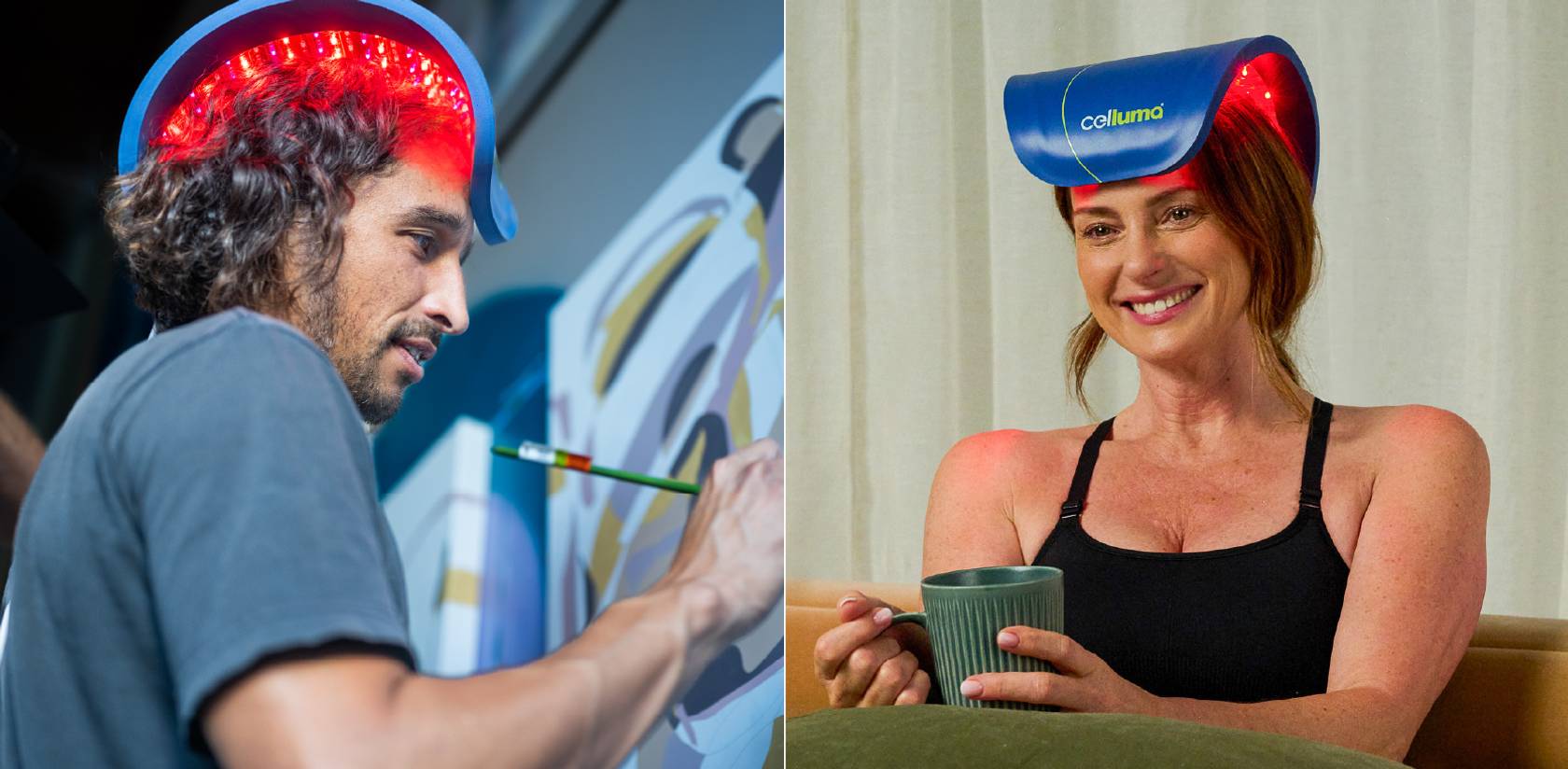
Celluma Hair Mode uses 640nm red light and is FDA-cleared for the promotion of hair growth. Treatments are administered every other day for 16 weeks, with each session lasting 30 minutes.
The device’s patented shape-taking design allows close proximity to the scalp, which is critical for therapeutic light delivery. Light intensity decreases with distance, following the inverse square law — making consistent and close proximity important for effective energy absorption.
Supporting the Scalp Environment
Healthy hair growth also depends on a well-supported scalp environment. Factors such as hydration, barrier integrity, and microcirculation influence follicular resilience.
When combined with supportive topical care such as RESTORE Hair Serum, light-based follicular stimulation can be paired with scalp-focused conditioning to promote overall scalp wellness.
Stress can disupt the hair growth cycle and influence follicular energy production. Photobiomodulation provides a research-supported approach to increasing mitochondrial ATP production and supporting the biological processes required for hair growth.
Celluma's Hair Mode is FDA-cleared for the promotion of hair growth and is designed around clinically studied optical parameters. When used consistently and as directed, it offers a non-invasive, drug-free option to support fuller-looking, healthier hair.
Selected Scientific References
Arck, P.C. et al. (2003). Stress inhibits hair growth in mice by induction of premature catagen development. FASEB Journal. https://doi.org/10.1096/fj.02-0869com
Peters, E.M.J. et al. (2006). Stress and the hair follicle: Exploring the connections. American Journal of Pathology. https://doi.org/10.2353/ajpath.2006.060323Peters
Karu, T.I. (1999). Primary and secondary mechanisms of action of visible to near-IR radiation on cells. Journal of Photochemistry and Photobiology B. https://doi.org/10.1016/S1011-1344(98)00219-X
de Freitas, L.F., & Hamblin, M.R. (2016). Proposed mechanisms of photobiomodulation. IEEE Journal of Selected Topics in Quantum Electronics. https://doi.org/10.1109/JSTQE.2016.2561201
Lanzafame, R.J. et al. (2013). The growth of human scalp hair mediated by visible red light. Lasers in Surgery and Medicine. https://doi.org/10.1002/lsm.22173
Jimenez, J.J. et al. (2014). Efficacy and safety of a low-level laser device in the treatment of hair loss. American Journal of Clinical Dermatology. https://doi.org/10.1007/s40257-014-0086-7
Avci, P. et al. (2014). Low-level laser therapy in the treatment of hair loss. Lasers in Surgery and Medicine. https://doi.org/10.1002/lsm.22170


